


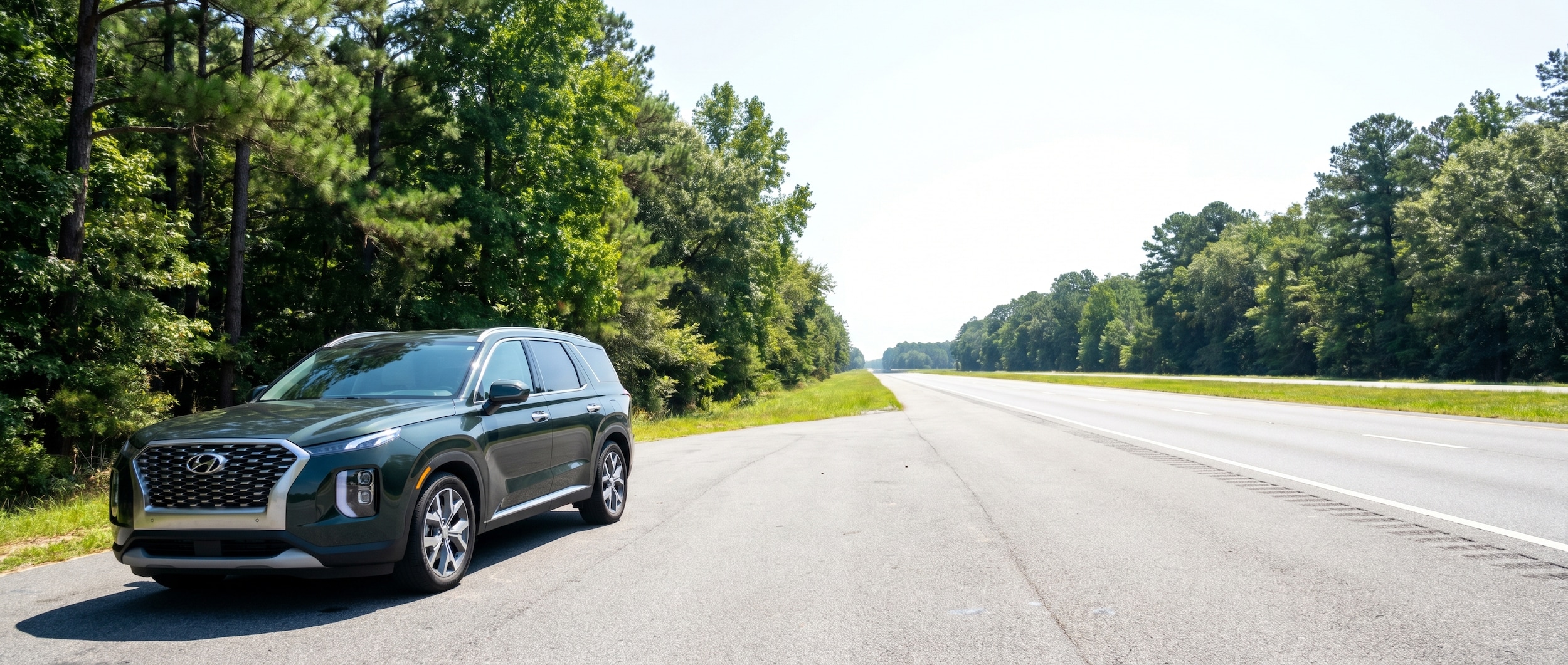
The Birmingham to Atlanta run on I-20 is one of the most driven stretches of highway in the Southeast - about 150 miles of hills, heavy truck traffic, and Alabama-to-Georgia weather changes that can genuinely stress a vehicle that isn't prepared. If you're planning this trip in your Hyundai® and thinking a quick tank of gas is enough prep, this guide is worth a few minutes of your time before you leave.
What Makes the I-20 Atlanta Run Harder on Your Vehicle Than You Think
Most people treat the Birmingham-to-Atlanta drive like a casual highway cruise, but the terrain tells a different story. The stretch between Birmingham and the Georgia state line includes rolling grades and elevation changes that put consistent load on your engine, transmission, and brakes - especially if you're driving a loaded Palisade or Santa Fe with the family.
Add to that the construction zones near the I-459 interchange on the west side of Birmingham and the notorious merge traffic around the I-285 perimeter around Atlanta, and you've got a trip that rewards preparation.
Here's what actually matters before you go:
- Tire condition and pressure - Alabama's temperature swings between morning and afternoon can drop PSI, and underinflated tires on sustained highway miles increase heat buildup and wear
- Cooling system health - Prolonged highway driving at speed generates sustained engine heat, especially on grades
- Brake condition - The descent into Georgia after passing the state line includes sections where brakes earn their keep
- Fluid levels - Oil, coolant, and transmission fluid should all be checked, not assumed
- Battery charge and terminals - A battery that barely starts your car in a Birmingham parking lot may not finish the job in an Atlanta garage
Pro tip: Hyundai recommends checking tire pressure when tires are cold - meaning before you've driven more than a mile. Check yours at home before loading up, not at the gas station after you've already been driving.
The Pre-Trip Maintenance Checklist for Your Hyundai
Before hitting I-20 eastbound, run through this list. Some of these you can check at home in five minutes. Others are better handled by a certified technician before you leave Birmingham, AL.
Things you can check yourself:
Checklist:
- Tire pressure (check the sticker inside your driver's door for your specific PSI)
- Tire tread depth (use the quarter test - insert a quarter into the tread; if you can see the top of Washington's head, it's time for new tires)
- Engine oil level and color (dark brown or black oil past your service interval is a problem)
- Coolant reservoir level
- Windshield washer fluid (truck spray on I-20 is relentless)
- All exterior lights including brake lights
- Wiper blades - afternoon thunderstorms are common between Birmingham and Anniston even in summer
Things worth having a technician verify:
Checklist:
- Battery load test and terminal condition
- Brake pad thickness and rotor condition
- Air filter condition
- Transmission fluid level and color
- TPMS sensor function on all four wheels
Matching Your Maintenance Needs to Your Hyundai Model
Different models in the Hyundai lineup have specific considerations worth knowing before a long interstate drive. Here's a quick breakdown:
| Hyundai Model | Key Pre-Trip Focus | Why It Matters for I-20 |
|---|---|---|
| Palisade / Palisade Hybrid | Transmission fluid, brake condition, tire pressure | Heavier vehicle with full passenger load on grades |
| Santa Fe / Santa Fe Hybrid | Cooling system, hybrid battery health | Sustained speeds stress hybrid systems on long runs |
| Tucson / Tucson Hybrid | Oil level, TPMS, wiper blades | High-frequency commuter car - wear accumulates fast |
| Sonata | Belt and hose inspection, tire condition | Sedan aerodynamics make it efficient but vibration issues show up at highway speed |
| Elantra / Elantra N | Oil, tire pressure, brake pads | Smaller displacement engine works harder on grades |
| Kona | Coolant and oil check | Smaller engine, sustained 70+ mph can run warm |
| Venue | Battery, oil, fluid check | Urban car pushed into highway use benefits from full fluid review |
If you've been putting off a service appointment, the week before an Atlanta trip is a smart time to take care of it. You can schedule service through Hallmark Hyundai Birmingham and have everything verified before you load up the car.
What Birmingham's Climate Does to Your Hyundai Year-Round
Birmingham, AL sits in a climate zone that swings hard between seasons - humid summers that push cooling systems and air conditioning units hard, and winters that drop battery capacity and harden rubber components. These seasonal stresses are worth understanding if you're a regular I-20 driver.
Summer trips: The stretch from Birmingham toward Anniston runs southeast and can see heat indexes well above 95°F on summer afternoons. If your Hyundai's cabin air filter is clogged or your refrigerant is low, your A/C works harder and your engine runs hotter. On a packed Palisade with five passengers and luggage heading to Atlanta in July, that matters.
Fall and winter trips: Birmingham winters are mild compared to the Midwest, but temperatures in the 20s and 30s do affect battery performance. A battery delivering 80% of its rated capacity on a cold December morning in Birmingham may drop to 60% by the time you've sat in Atlanta traffic for an hour. Get a battery load test if yours is older than three years.
Spring trips: Spring brings the most unpredictable weather. The stretch along I-20 between Birmingham and the state line can see severe thunderstorms move through quickly. Wiper blade condition and tire tread depth become safety considerations, not just maintenance items.
Did you know? Hyundai's Tucson Hybrid uses a 1.6L turbocharged engine paired with an electric motor. On extended highway drives, this system manages load between the two power sources automatically - but it benefits from clean oil and a healthy 12-volt battery, which powers the system's management computers.
The Hybrid Consideration: What Santa Fe Hybrid and Palisade Hybrid Owners Should Know
If you're driving a Santa Fe Hybrid™ or Palisade Hybrid to Atlanta, there are a few things that apply specifically to hybrid powertrains before a long trip.
Hybrid vehicles use regenerative braking to recapture energy, which means your physical brake pads see less wear than a standard vehicle under normal driving. However, on sustained downhill grades - and there are a few between Anniston and the Georgia line - the system shifts brake load back to physical pads. Pad thickness still matters, even in a hybrid.
The 12-volt auxiliary battery in a Hyundai hybrid is separate from the high-voltage traction battery, and it's the one most likely to cause problems. It powers the electronics, the start system, and the hybrid management computers. If it's weak, you can experience sluggish starts or warning lights even when the high-voltage pack is healthy.
Before a long trip in a Hyundai hybrid:
- Have the 12-volt battery load tested
- Confirm the high-voltage cooling system is functioning (the HV battery has its own cooling circuit)
- Check brake fluid - it absorbs moisture over time and affects braking feel
- Verify your regenerative braking feels normal with no pulsing or hesitation
- Confirm the tire pressure on all four wheels - hybrid models carry more weight and pressure management matters more
How Far Before Your Trip Should You Schedule Service?
Timing your service visit correctly makes the difference between a relaxed trip and a last-minute scramble. Here's a practical framework:
- Two weeks before: Ideal window. This gives time to order any parts that aren't in stock - brake pads for specific trims, cabin air filters, or specialty fluids for hybrid models. You'll also have time to drive the car post-service and confirm everything feels right.
- One week before: Still comfortable. Most maintenance needs can be handled with standard parts on hand. If anything unexpected turns up - a cracked belt, worn rotors - there's time to address it without rushing.
- Two to three days before: Workable for routine maintenance (oil change, fluid top-offs, tire pressure). Not ideal if there's any chance of discovering a larger issue.
- Day before: Oil and fluids only. Not the right time to discover brake wear or a marginal battery.
It's worth taking a look at your schedule service options earlier rather than later, especially during peak travel windows like Memorial Day weekend, Labor Day, and the weeks around July 4th when service bays across Birmingham fill up fast.
Common Questions About Hyundai Maintenance Before Driving I-20 to Atlanta in Birmingham, AL
How often should I change the oil in my Hyundai before a long highway trip to Atlanta?
Hyundai recommends oil changes every 5,000 to 7,500 miles under normal conditions, or every 3,000 to 5,000 miles if you do a lot of stop-and-go driving around Birmingham, AL. If you're within 1,000 miles of your next interval when planning an Atlanta trip, change it before you go. Fresh oil handles sustained highway heat better than degraded oil approaching its limit.
Is it worth having my Hyundai's tires checked before driving I-20 in Birmingham, AL?
Yes, and it takes less than ten minutes. Tire pressure drops roughly one PSI for every 10-degree temperature drop overnight - common in Birmingham, AL between seasons. Underinflated tires run hotter on sustained highway driving, which accelerates wear and reduces fuel economy on a 150-mile trip. A quick pressure check and visual inspection of tread depth is one of the highest-value pre-trip steps you can take.
What should Hyundai hybrid owners check before a long Atlanta drive?
Hyundai Santa Fe Hybrid and Palisade Hybrid owners should specifically verify the 12-volt auxiliary battery condition, high-voltage battery cooling system, brake fluid level, and brake pad thickness before a long trip. Hybrid brake systems use regenerative braking most of the time, but sustained grades - like those on I-20 approaching the Georgia line - engage physical pads and require them to be in good condition.
Does Hallmark Hyundai Birmingham offer pre-trip inspection services?
Yes. The service team at Hallmark Hyundai Birmingham can perform a full multi-point inspection that covers tires, brakes, fluids, battery, belts, and filters. This is a practical option for anyone planning a trip to Atlanta who wants a certified technician's eyes on the vehicle before getting on I-20.
How does Birmingham's summer heat affect my Hyundai before a long drive?
Birmingham, AL summers regularly push heat indexes above 95°F, which stresses your Hyundai's cooling system, A/C compressor, and under-hood components. Before a summer drive to Atlanta, have your coolant mixture and level checked, confirm the cabin air filter is clean so the A/C doesn't overwork, and verify your oil level is at the full mark. A Kona or Elantra with a smaller displacement engine running at highway speed in 95-degree heat benefits most from this prep.
What if I discover a problem with my Hyundai right before the Atlanta trip?
If a technician finds a worn brake pad, marginal battery, or low fluid during a pre-trip inspection, it's worth addressing before you go rather than hoping it holds. A brake job or battery replacement in Birmingham, AL costs significantly less than a roadside service call or tow from somewhere along I-20 east of Anniston. The inconvenience of a brief delay before leaving is much easier to manage than a breakdown on the road.
Ready for the Drive? Start Here Before You Leave Birmingham
The Birmingham-to-Atlanta run on I-20 is manageable in any well-maintained Hyundai. The Palisade handles it with ease when loaded for a family weekend. The Sonata makes the trip efficiently at highway speeds. The Santa Fe Hybrid turns in solid fuel economy across the whole stretch. What separates a smooth trip from a stressful one is the fifteen minutes of preparation you do before you leave.
The team at Hallmark Hyundai Birmingham is set up to handle pre-trip inspections, routine maintenance, and anything your multi-point check turns up - with certified Hyundai technicians who know these vehicles specifically. Book your appointment before your travel window fills up, and leave Birmingham with confidence instead of crossed fingers.
Categories:
Social


